
Mother and Son - Patron Saints of Wales
The coast of Pembrokeshire in South West Wales is a wild and rocky place. It seemed fitting that a storm rolled in bringing lashing rain while I was standing above St. Non's Bay where she gave birth to David in the midst of a much more violent storm around 500 CE. The legends record that she gripped the standing stone she was labouring against so hard that she left her hand prints there. It was also said that although thunder and lightning raged around her, the place where Non gave birth was filled with light and peace.


This was in total contrast to the violent rape that resulted in David's conception. In spite of this violation of Non's vow of chastity to her God she was sure that the child she carried would be a great saint.
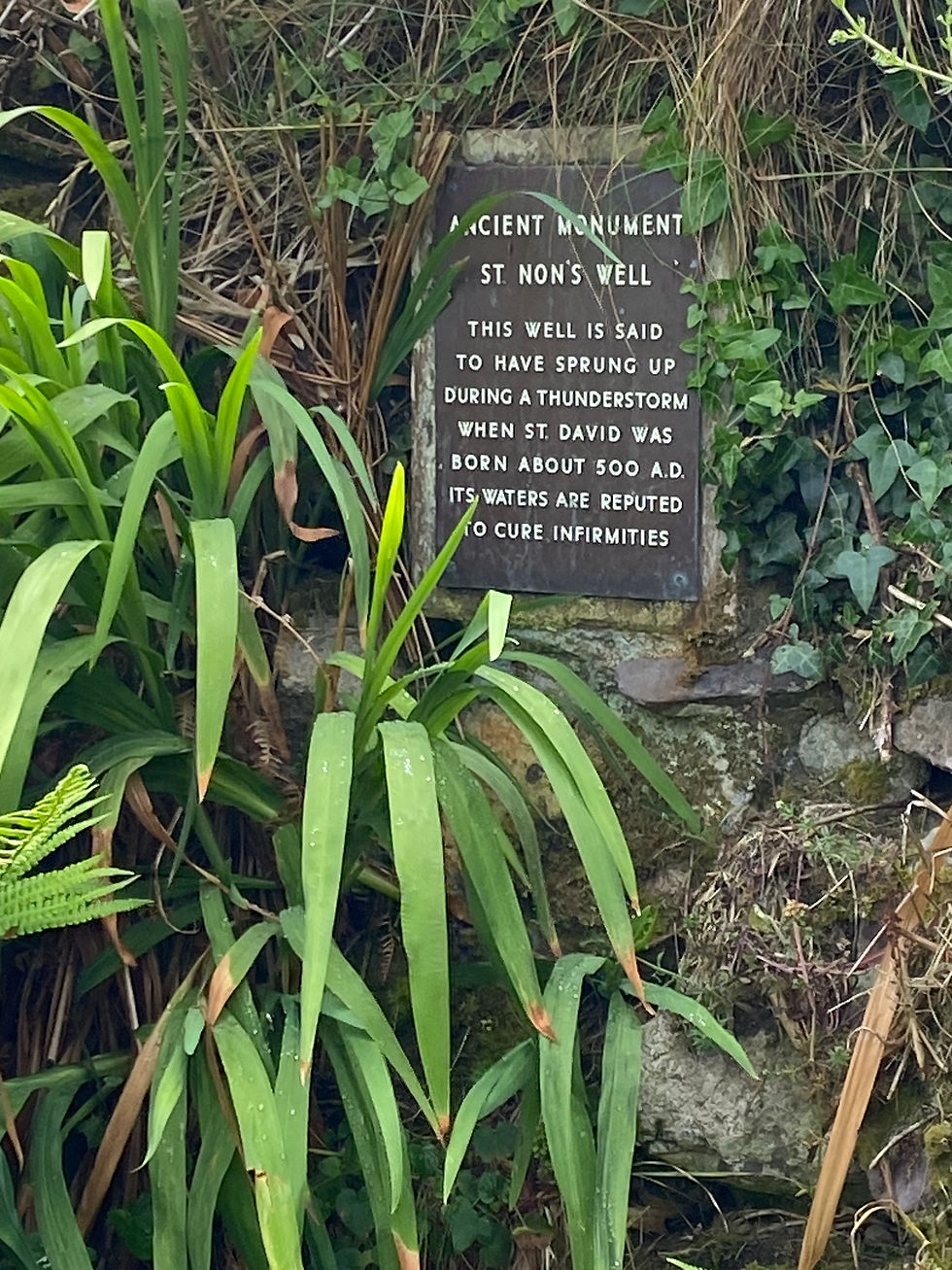
A well was said to have sprung up in the place where David was born so that he could be baptised immediately. This well still flows today and is an important stopping point on the Pembrokeshire Coastal Walk.


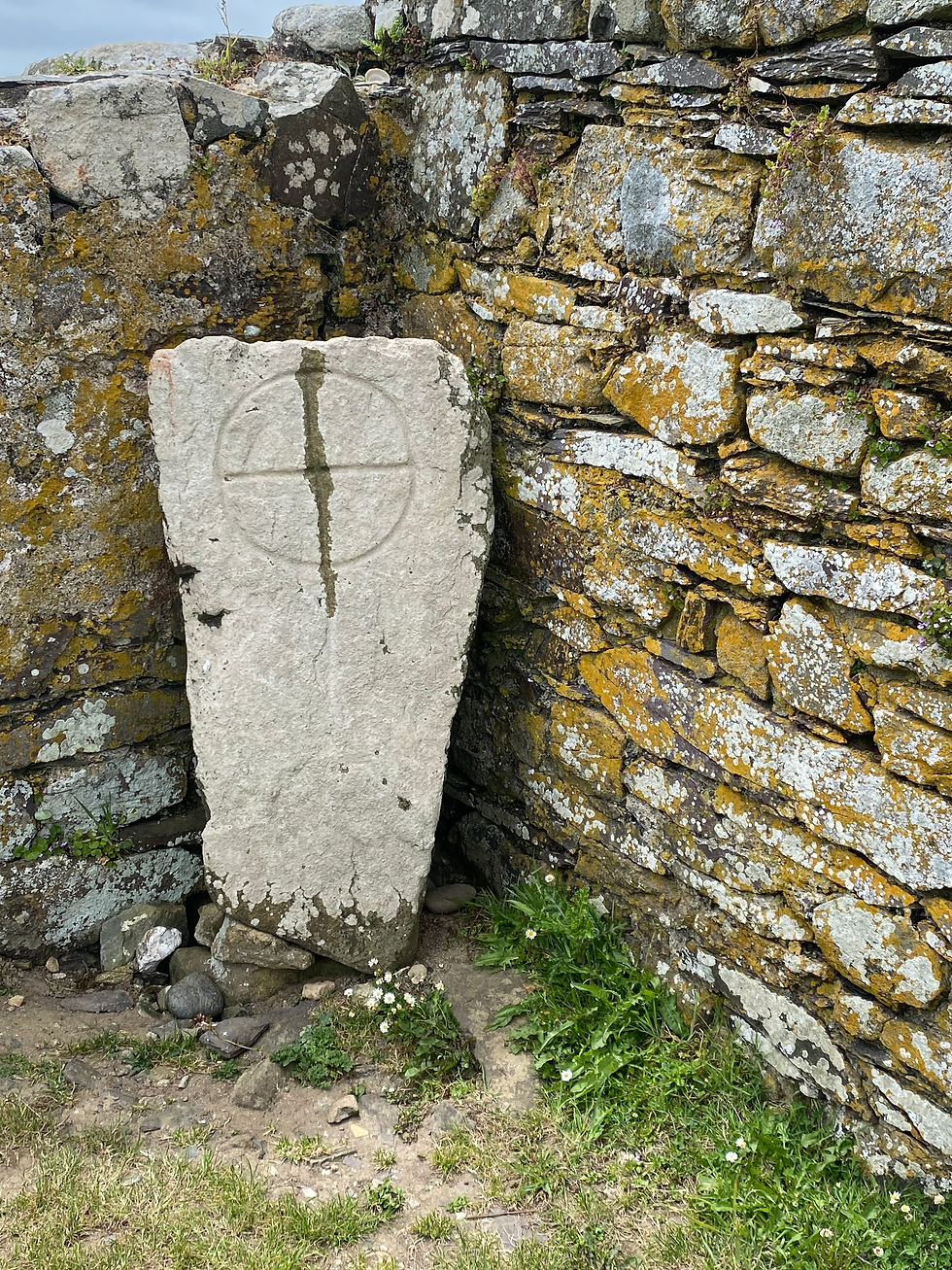
A short distance from the well closer to the coast there are the ruins of a medieval chapel. Archeological research has shown that beneath these ruins there are slab lined or 'cist' graves that date from the seventh to the ninth centuries and a gravestone marked with a cross inside the ruins dates from the same era.


In 1934 Cecil Morgan- Griffiths built a small single-celled Catholic Chapel in the grounds of his home so his wife could have Mass said by visiting priests. He used stones salvaged from buildings in the vicinity to recreate the look and feel of the ruined medieval chapel nearby.
The chapel is the westernmost chapel in Wales and one of the smallest measuring 25 feet by 12 feet. Caretakers keep the church open for pilgrims and walkers seeking shelter. On the day I visited a sign asked us to keep the door open so the swallows could come and go to feed their chicks in a nest in the rafters,


While the exterior is rather austere the space inside is filled with light from simple colourful stained glass windows. It was something of a rarity to see three female saints other that Mary the Mother of God, represented in the sanctuary windows. These were of Bride (our Irish Brigid), Winefride and of course St. Non. There are also windows to Non's son David and St. Brynach who founded over 12 churches, with the one at Nevern being his chief church and the place from which he withdrew to be a hermit.
David was fostered as a young boy by a family of a bishop and his mother Non answered the call to establish Christian communities in Cornwall and Brittany.
David was sent to St.Illtud's school in Llanilltud Fawr to be educated for a life of Christian service. David chose to live a very simple life going barefot and bare-headed. He carried a large branch instead of a crozier and rang a metal bell to attract people to come and learn about Christ. David is considered to have founded twelve monasteries with his largest community in the place where St.David's Cathedral is today. David placed a great emphasis on community and although he chose to live mainly on water, vegetables and herbs he was known for the hospitality he extended to all who came to see him. He treated all people with kindness and humanity regardless of their status, material wealth or poverty, infirmity and age.
He is remembered for the final words he shared with those who gathered in sorrow around his death bed. I find these simple words encouraging and achievable with God's grace.


